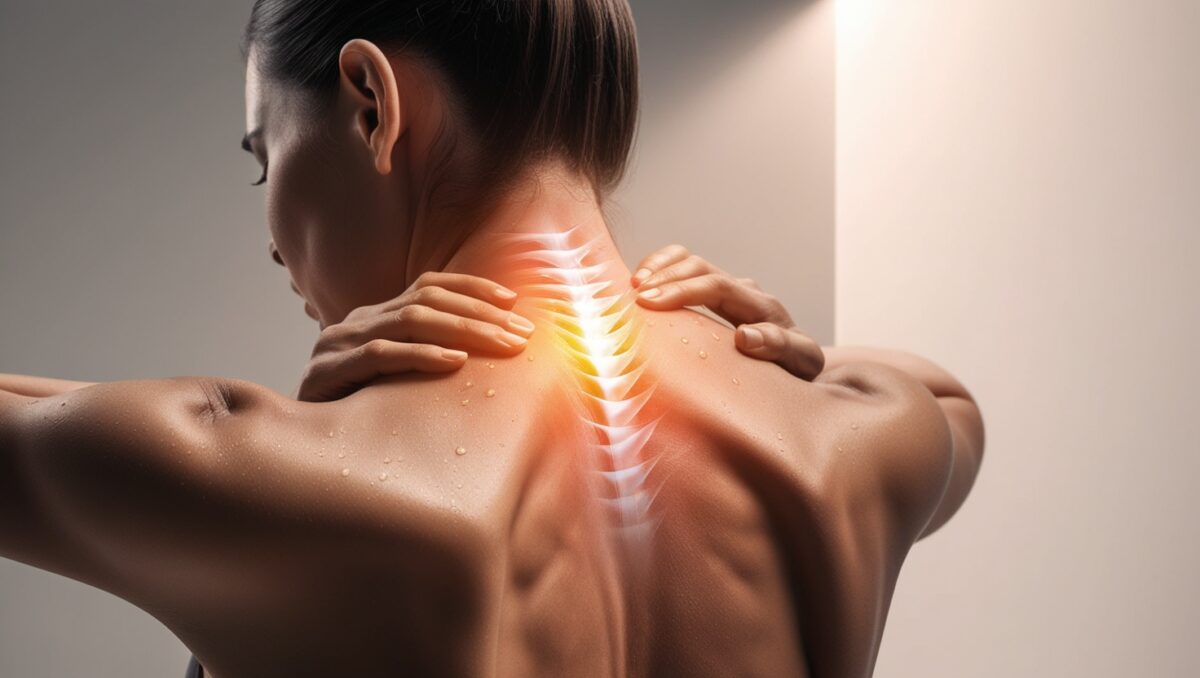



Discover the causes of spinal discomfort and explore proven treatment methods.
2025-03-05
Burning Sensation Between the Shoulder Blades: Exercises and Home Rehabilitation Methods
2025-03-06
4o mini
Discover the causes of spinal discomfort and explore proven treatment methods.
2025-03-05Burning Sensation Between the Shoulder Blades: Exercises and Home Rehabilitation Methods
2025-03-06Discover the causes of spinal discomfort and explore proven treatment methods.
2025-03-05Burning Sensation Between the Shoulder Blades: Exercises and Home Rehabilitation Methods
2025-03-06Table of Contents:
Definition of the Lower Back Area and Why It’s So Sensitive
Causes of Discomfort in the Lower Back Area
Accompanying Symptoms – What Should You Pay Attention To?
Diagnostics – What Tests Can Help?
Ways to Manage Pain and Prevention
The Role of Physical Activity and Proper Posture
Summary
The lower back area includes the lumbar spine and the sacrum (S1–S5). This region is where the lumbar vertebrae connect to the pelvis through the sacroiliac joints. Due to this connection, the lower back is crucial for transferring weight from the upper body to the legs and vice versa.
When something goes wrong in the "lower back," it can affect the entire movement mechanics. You may feel stiffness while walking, pain when bending down, or difficulty getting out of bed.
Incorrect lifting: Lifting heavy objects with a bent back, leading to strain on joints and muscles.
Chronic sitting: Lack of movement weakens stabilizing muscles and increases pressure on the vertebrae.
Sacroiliac joint inflammation: Can occur in conditions like ankylosing spondylitis.
Sports overuse: Running on hard surfaces or weight training with improper technique.
Postural issues: For example, hyperlordosis, an excessive curve in the lower back.
Limited mobility: Difficulty bending forward or leaning back.
Radiating pain: May extend to the buttocks, thighs, or even lower (sciatica).
Morning stiffness: Especially if the pain is inflammatory in nature.
Difficulty standing for long periods: Feeling a "pulling" sensation in the lower back after a while.
Clinical examination: Interview, range of motion, and stability tests.
X-ray of the pelvis and lumbar spine: Helps exclude serious degenerative changes or fractures.
Magnetic Resonance Imaging (MRI): When disc herniation or joint inflammation is suspected.
Ultrasound of the musculoskeletal system: Sometimes useful for evaluating soft tissues and hip joints.
Warm or cold compresses: Depending on your preferences and the level of inflammation.
Gentle movement: Short walks, stretching exercises, and light activities to prevent stiffness in the spine.
Physical therapy: Tailored exercises, manual therapy, or kinesiology taping can significantly reduce pain.
Healthy habits: Ergonomic sitting, choosing the right mattress for sleep.
Core training: Stable pelvis and strong abdominal muscles are essential for a healthy spine.
Balance exercises: Strengthen muscles responsible for stabilization (e.g., on a Bosu ball or using a stability ball).
Avoiding prolonged sitting: Stand up every 30–60 minutes, take short walks, or do a few forward bends.
Proper posture: Keep your head above your shoulders, shoulders above your hips, and pelvis in a neutral position.
The lower back area is often overlooked in daily exercises and preventive care. Many people think that as long as the lumbar spine doesn’t hurt, everything is fine. However, even minor discomfort in the sacroiliac joints can gradually worsen and lead to more serious problems.
The solution is to take care of your entire body – not only the lumbar spine but also the proper functioning of the hips, glute muscles, and abdomen. Remember: the spine is not a separate organ, but part of a complex movement system.
(This article is informational and does not replace a consultation with a specialist. If in doubt, contact a doctor or physical therapist.)
4o mini