



How to Deal with Lower Back Pain? Practical Tips from Physiotherapists
2025-03-10
Discomfort in the Lateral Part of the Lower Spine – Home Remedies and Exercises
2025-03-10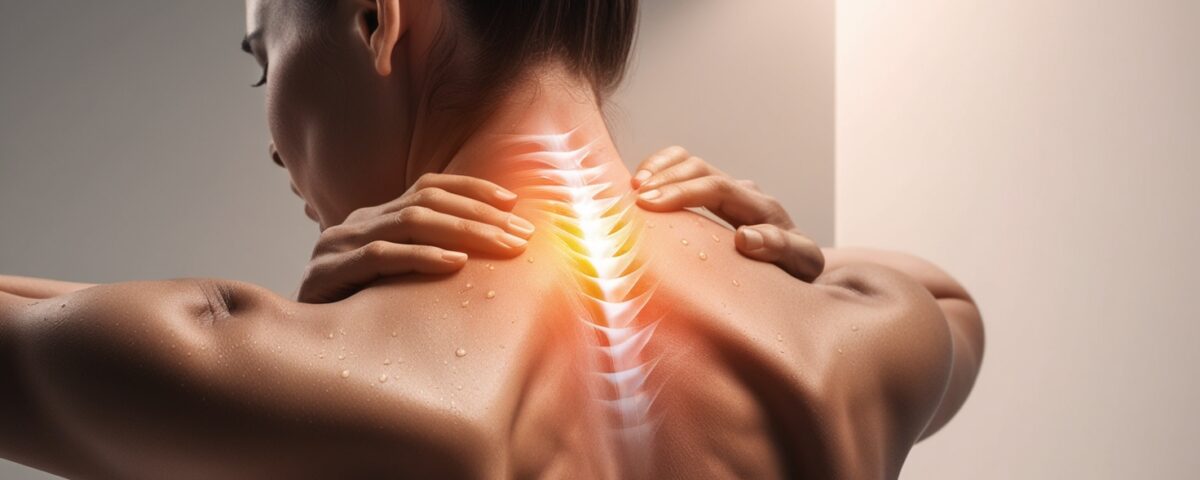
Table of Contents:
-
What does pain between the shoulder blades feel like?
-
Why can the thoracic spine be problematic?
-
The most common causes of pain in the shoulder blade area
-
Home techniques to relieve discomfort
-
Mobility and strengthening exercises
-
When is it time to see a specialist?
-
Summary
1. What does pain between the shoulder blades feel like?
Pain in this area can show up as:
-
a stabbing or sharp sensation,
-
burning,
-
pressure or tightness,
-
pain that radiates to the neck or arms.
It's often accompanied by limited shoulder movement or a feeling that the upper back is “locked up.” In my work with patients, I often see this kind of pain linked to prolonged sitting or poor chest positioning during weight training.
2. Why can the thoracic spine be problematic?
The thoracic part of the spine (T1–T12) is less mobile compared to the lumbar section. That’s mainly because the ribs are attached to these vertebrae, which adds stability but limits flexibility.
If you combine that with muscle tightness (especially in the chest and between the shoulder blades) caused by frequent slouching, it's a recipe for discomfort. Over time, tension can spread to the neck or even the lower back.
3. The most common causes of pain around the shoulder blades
-
Poor posture – rounded shoulders, hunched back, forward head position.
-
Muscle overload – from lifting, strength training, or manual labor.
-
Sedentary lifestyle – lack of movement contributes to tightness and stiffness in the thoracic spine.
-
High stress – emotional tension often settles in the neck and upper back muscles.
-
Injuries – a fall or sudden movement can sometimes trigger pain.
4. Home techniques to relieve discomfort
-
Chest stretches: A simple one is to stand in a doorway, place your forearms on the frame, and gently lean forward.
-
Massage with a ball: Use a small ball (like a tennis ball), place it between your shoulder blade and a wall, and slowly move to release tight spots.
-
Warm compresses: A hot water bottle or heating pad can help relax the muscles.
-
Breathing exercises: Deep nasal breathing that activates rib movement can help loosen the chest and intercostal muscles.
5. Mobility and strengthening exercises
-
Shoulder blade movements
-
Stand upright, raise your shoulders, and roll them forward and backward.
-
Focus on really getting your shoulder blades to “glide” across your back.
-
-
Stretching between the shoulder blades
-
While seated, cross your arms in front of you and try to reach your shoulder blades.
-
Gently round your back into a curve.
-
-
Strengthening the shoulder rotators
-
Use light dumbbells or resistance bands. Perform controlled arm bends and extensions in different directions.
-
-
All-fours position (cat-cow stretch)
-
Slowly arch your back upward like a cat, then dip it down (cow pose).
-
Try to involve your thoracic spine — the area between your shoulder blades.
-
6. When is it time to see a specialist?
-
If the pain is sharp and doesn’t go away despite home remedies.
-
If you feel tingling or numbness in your arms or hands.
-
If the pain affects your breathing or radiates to the chest in a concerning way.
-
After an injury or trauma (like a fall or a hit).
A physiotherapist or orthopedic doctor can determine whether it’s just muscle strain or something more, like a joint or rib issue.
7. Summary
Pain between the shoulder blades is often the result of daily habits — poor posture, not enough movement, or improper body mechanics. The good news is that in most cases, you can ease the pain with simple stretching and strengthening exercises, regular breaks from sitting, and mindful movement during work and workouts.
Still, if the pain persists or worsens, don’t hesitate to see a specialist. Your back deserves proper care — regular activity and prevention go a long way in keeping problems at bay.
Note: This article is for educational purposes only and should not be taken as medical advice.